
Cynthia Whitaker leaned against the wall in her new house on South Salina Street and took a deep breath.
“Well, how about that?” she said.
Then “Yes.”
“Yes. Yes. Yes.”
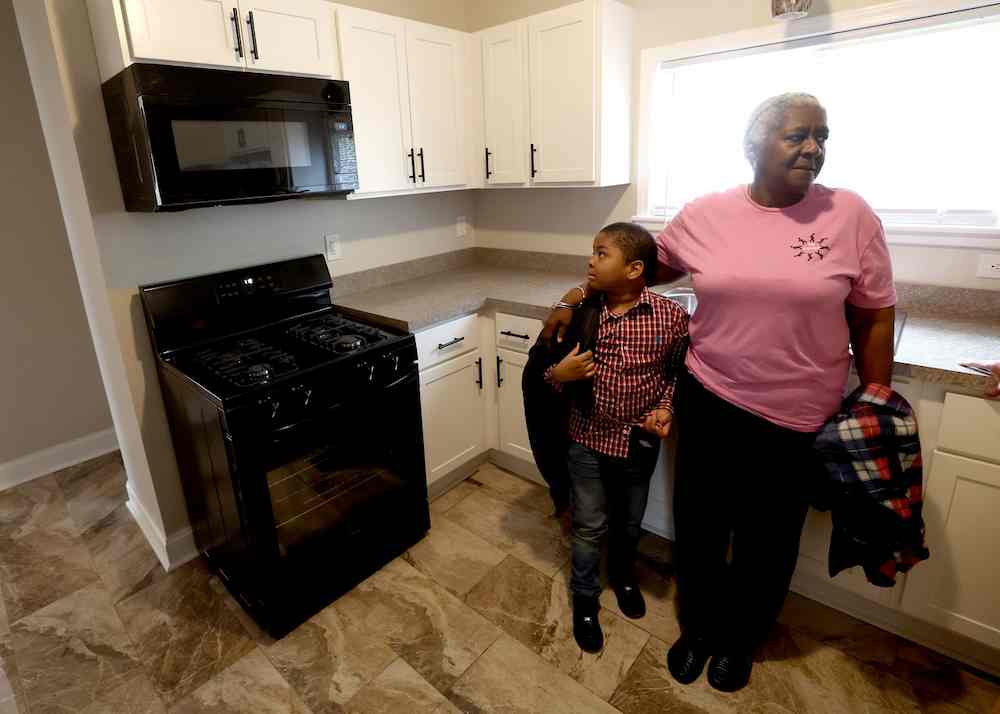
She walked from room to room, opening closet doors and inspecting the shiny marble-like kitchen floor. She said she was grateful for the blinds on each window – an expense a first-time homeowner doesn’t always consider in advance.
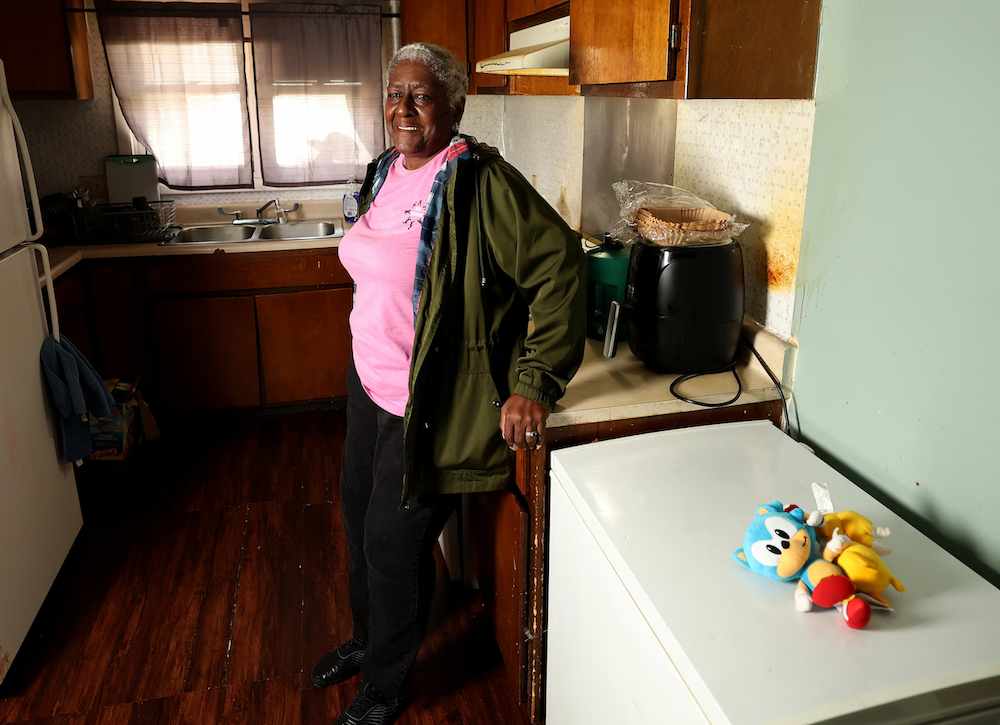
In all her 73 years, only one person in Whitaker’s family has ever owned a home. Whitaker grew up in Brooklyn. She raised seven children. When her daughter died of complications from asthma, she took in her three grandchildren. Nine years ago, they moved to Syracuse.
Whitaker felt lucky to get an apartment for four in McKinney Manor, public housing built in 1990 just south of downtown Syracuse.
Then, the Syracuse Housing Authority announced plans to tear down McKinney Manor and build new apartments in their place. Whitaker’s apartment is among the first to go in a $1 billion, 12-phase effort to replace more than 600 units of public housing with more than 1,300 units for people of all incomes.
Tenants remaining in 75 McKinney Manor units have a June 10 deadline to make a decision.
Most people see two choices: Move to another apartment in public housing or take a Section 8 voucher and look for an apartment somewhere else. When the new apartments are ready, there will be room for anyone who wants to return.
But there is a third choice: Buy a house and be rid of public housing forever.
Government agencies, non-profits and banks are layered with grants and social workers who are eager to make it happen for the hundreds of public housing tenants who will have to move.
Syracuse’s typical first-time homebuyer programs have been ramped up for tenants who live in the footprint of the new East Adams project. It’s an option not often considered by people whose parents and grandparents have lived on the edge of a financial cliff.
A class starts with basic checkbook management and can end with a house.
Home HeadQuarters can help finance a mortgage with a low interest rate and only 2% down. Blueprint 15, with a grant from the JPMorgan Chase Foundation, will write a check for $5,000 for a down payment, regardless of income.
The Syracuse Housing Authority allows tenants to use the subsidy from a Section 8 rental voucher to pay the mortgage. Those payments can last 15 years on a 20-year mortgage and longer for the elderly or people with disabilities.
SHA will also help with the cost of a home inspection. The authority will cover moving costs.
Whitaker is the first McKinney Manor resident to use this program to buy a home. Theresa Durham, a neighbor, is on a similar path. Durham is using another set of incentives – the state’s Affordable Homeownership Opportunity Program.
Whitaker credits Marquita Hetherington for introducing her to the idea. Hetherington lives nearby in the Pioneer Homes neighborhood, which is scheduled to be torn down next.
Hetherington also works as a program coordinator for Blueprint 15, a nonprofit that describes itself as a quarterback of the many agencies involved in turning old public housing in the former 15th Ward into the new East Adams neighborhood.
Hetherington signed up for the first-time homebuyer class over Zoom. She was surprised to find out it was free for public housing tenants. But she thought it would be better for people to take the class in person.
So, she asked Home HeadQuarters to bring the class physically closer to the neighborhood, in Blueprint 15’s headquarters on Salina Street. Hetherington also suggested they offer childcare and serve dinner to make sure people could really engage.
“We tried to tackle any hurdle that would prevent them from coming to class,” she said.
She calls the partnership “Faith,” which stands for Further Advancing Independence Through Homeownership.
It is rare for people to jump from public housing to homeownership. Less than 1% of all public housing tenants in Syracuse have signed up for the program that allows Section 8 vouchers to be used for mortgage payments, according to the U.S. Department of Housing and Urban Development.
Across the country, fewer than 10,000 public housing residents have taken the course, HUD records show.
Hetherington sees it as the best way to build generational wealth.
“It’s tried and it’s true and it’s proven,” Hetherington said. “I think that with residents who live in the 15th Ward, they have a generational poverty mindset. We say they have a hustler or survivor mindset versus I am here to build wealth and this is how I can do that with my family.”
Whitaker signed up for the class in December. Five months later, she is packing boxes.
HomeHeadQuarters acquired the house in 2021 from Syracuse Model Neighborhood Corp., which had allowed a single-family home to be carved into two rental units.
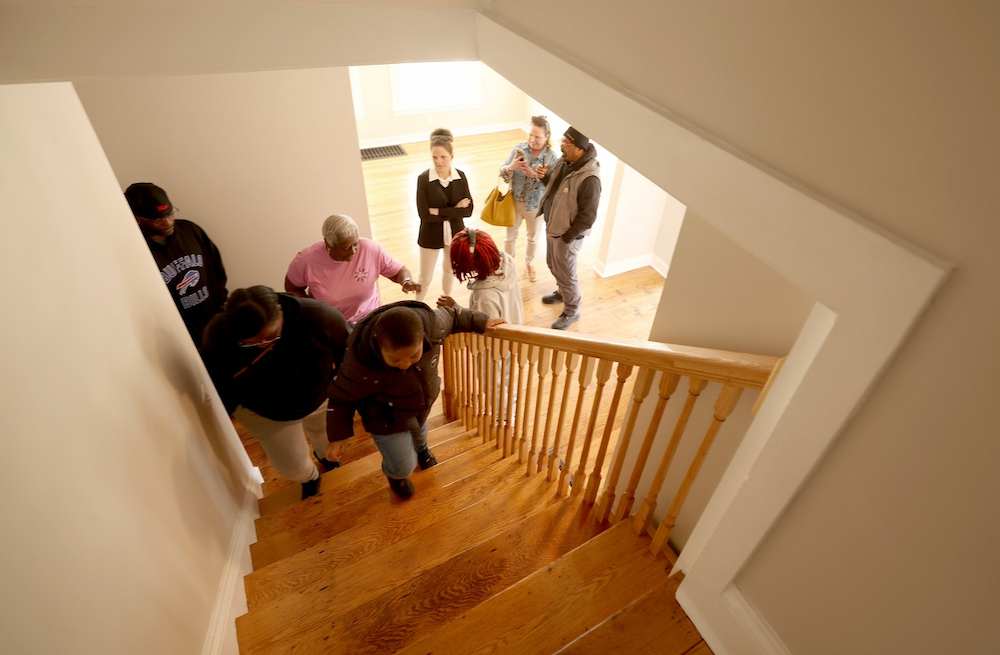
Home HeadQuarters hired Kenneth Kinsey, owner of TKTD General Contracting, to restore it to a four-bedroom home for one family. Everything looks new: Ceiling fans in almost every room, a new wooden railing for the stairs, Formica countertops and custom-made French doors for the front.
The non-profit will likely spend more than $200,000 on renovations.
Whitaker bought it for $140,000, according to Home HeadQuarters.
HomeHeadQuarters has set up a unique program to make that happen in a city where renovations can cost far more than the sale value of a 100-year-old house in a neighborhood that needs a boost.
For Hetherington, buying a home is the surest way for someone in poverty to pass wealth on to the next generation.
Whitaker laughed when Hetherington said that. She plans to be around for a long time, she said. But she quietly asked if she could give the house to her grandchildren if anything happened to her.
The answer is yes.
Jaron Jones, 6, has already picked out his playroom. He followed his grandmother with wide eyes on the day Home HeadQuarters unlocked the new French doors. He said he loved the shiny kitchen floor. He climbed to the attic to make sure there weren’t any spiders.
Whitaker put one arm around Jaron and waved away some tears with the other.
Tailisha Black, home ownership center manager for Home HeadQuarters, taught the 8-hour course and gave one-on-one counseling. She offered to help move boxes.
Whitaker said Hetherington and Black gave her confidence.